Commercial Mobile Signal Boosting for UK Buildings
Poor mobile signal inside your office, factory, warehouse, dealership or commercial building?
Poor mobile signal inside your office, factory, warehouse, dealership or commercial building?
When the mobile phone signal in your building is poor, you don't have to just put up with it. In most commercial buildings, poor indoor mobile coverage can be significantly improved using a professionally designed in-building mobile coverage system.
This website is designed specifically to help you understand the options available, some of the considerations and constraints, some of the legal implications, and why Litenet are considered amongst the best when it comes to designing, installing and supporting mobile signal boosters in the UK.
It's a problem we've all faced. There are places inside your building where mobile signal just doesn't exist. That familiar phrase gets uttered time and again "hang on a second, I'll just move closer to the window"
The technicalities of why mobile signals have trouble penetrating buildings can be boring and complicated. But buildings, both new and old, have problems. We can solve them with a range of mobile signal boosters from Litenet.
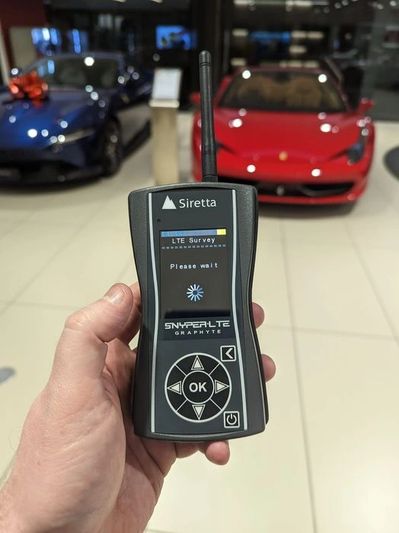
A Litenet engineer surveying a car dealership for mobile signal strength
Mobile signals can travel perfectly well outdoors but become significantly weaker as they pass through the materials used to construct a building. Walls, windows, roofs, cladding and insulation can all attenuate, absorb or reflect radio signals before they reach people and devices inside.
Lower-frequency mobile bands generally penetrate buildings better than higher-frequency bands. Higher-frequency services can provide valuable network capacity, but they often suffer greater losses when travelling through walls, coated glass and other building materials. This is one reason a phone can show excellent 4G or 5G coverage outside a building but poor or unusable service only a few metres inside.
Building construction has a major effect on signal ingress. Dense materials such as reinforced concrete, brick and stone can substantially reduce mobile signals, while metal cladding, foil-backed insulation and modern Low-E glazing can make the problem considerably worse.
Ironically, some of the features that make modern buildings more energy efficient can also make them more difficult for mobile networks to penetrate. Warehouses, factories, offices and other commercial buildings can therefore experience poor indoor coverage even when excellent mobile service is available immediately outside.
The important thing is that poor indoor mobile coverage can usually be measured, understood and improved. A professional mobile signal survey identifies what is happening before a suitable system is designed.

If the signal outside is good, grab it!
You don't need to know which mobile signal booster you need. That's our job.
Improving poor mobile coverage starts with understanding the building and the mobile environment around it. Rather than simply choosing a signal booster, Litenet surveys, designs, installs and validates a system specifically for the building, the networks required and the areas where coverage needs to be improved.
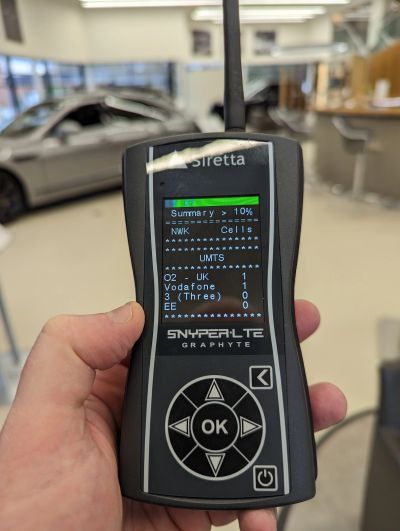
Litenet engineers carry out a detailed pre-design mobile signal survey using specialist RF test equipment and mapping tools. We measure the mobile environment both inside and outside the building to determine:
The survey gives us the information needed to understand why coverage is poor and to design a system around the building and the customer's actual requirements. It also allows us to prepare an accurate, fully costed proposal before installation begins.
Using the survey results, we create a technical mobile coverage design specifically for the building.
The design considers the networks that need improving, available outdoor signal, building construction, coverage areas, antenna positions, cable routes and the equipment required to distribute usable mobile signal throughout the intended areas.
We can then calculate the installation requirements in detail, including equipment, antennas, cabling, connectors, labour and access requirements.
The completed design is presented as a clear proposal so that IT teams, facilities managers, business owners and other project stakeholders can understand exactly what is being proposed and why.
Once the design has been agreed, our engineers install the mobile coverage system in accordance with the agreed proposal.
We plan the installation around the operation of the building wherever possible, with work often taking place during normal business hours or, where necessary, outside working hours to minimise disruption.
Our engineers hold the relevant training and access qualifications required for the work they undertake, including appropriate ECS or CSCS and IPAF certification where powered access equipment is required.
Cabling and equipment are installed in accordance with the system design and manufacturer requirements, whether the installation uses coaxial cable, Ethernet, fibre or a combination of technologies.
When the installation is complete, the system is commissioned and optimised for the mobile networks and coverage areas identified during the design.
Our engineers check antenna positioning, system configuration and performance throughout the building, making adjustments where necessary to achieve consistent coverage while ensuring that the system operates correctly and within the requirements applicable to the installed technology.
Where supported by the equipment, remote monitoring and management services are also configured.
The system is then placed into service ready for final testing and validation.
Installation is not the end of the project.
After commissioning, we test the completed system and carry out a post-installation mobile signal survey using the same measurement methodology used before the system was designed.
This allows us to compare the mobile environment before and after installation and provides measurable evidence of the improvement achieved inside the building.
Coverage, signal strength and quality are checked throughout the required areas and any final adjustments can be made before the project is completed.
The results can then be documented in a final validation report, providing the customer with a clear record of the completed installation and its performance.
We don't treat mobile signal systems as fit-and-forget installations. They are long-term infrastructure within a commercial building, so ongoing monitoring, maintenance and technical support are an important part of the service we provide.
Where supported by the installed system, Litenet can remotely monitor performance and system alarms, helping us identify potential problems before they affect users. We also ensure that relevant manufacturer software and firmware updates are applied so the system continues to operate correctly as mobile networks evolve.
Mobile networks themselves change over time. Operators modify frequencies, spectrum allocations and network configurations, and professionally installed systems may occasionally need adjustment to reflect those changes.
For installations serving a single mobile network, we can also reconfigure or modify the system if your organisation changes network provider in the future.
Our objective is not simply to improve the mobile signal on installation day, but to help keep it working reliably for the life of the system.

Modern dealerships depend heavily on mobile connectivity for staff, customers, connected vehicles, apps and authentication. Showrooms, workshops and metal-clad buildings can all suffer from poor indoor mobile coverage.
Factories can be particularly challenging for mobile coverage because of metal construction, machinery and large production areas. Reliable mobile connectivity is increasingly important for staff, maintenance teams and connected industrial equipment.
Poor mobile coverage can frustrate staff, visitors and customers and affect everyday productivity. We can improve coverage for selected mobile networks or design multi-network solutions for larger offices and commercial workplaces.
Large floor areas, metal cladding and racking can make warehouses difficult for mobile networks to penetrate. Improved indoor coverage can support staff communications, operational devices and mobile-connected systems throughout the building.
Guests increasingly expect reliable mobile connectivity throughout a hotel, not just Wi-Fi. We can improve indoor mobile coverage in bedrooms, public areas, meeting spaces and other parts of hospitality properties.
Basements, underground car parks and other below-ground spaces frequently have little or no usable mobile signal. Where suitable outdoor signal is available, a professionally designed system can bring mobile coverage into areas the network cannot naturally reach.
Yes — mobile signal boosters and repeaters can be used legally in the UK, but the equipment and the way it is used must meet the requirements of Ofcom's licence-exemption regulations.
There are many mobile signal boosters advertised online, but not all of them meet the technical requirements for lawful use in the UK. Non-compliant repeaters can cause interference with mobile networks and using equipment that does not meet the applicable requirements can put the user at risk of enforcement action.
Ofcom publishes technical requirements for licence-exempt mobile repeaters and also maintains a list of products that it understands meet those requirements following testing by an accredited test house. Ofcom does not “approve” or endorse individual products.
Litenet only specifies and installs mobile signal boosting equipment that has been designed and tested to meet the applicable Ofcom requirements. We consider compliance as part of the system design — not as an afterthought once the equipment has been installed.
For businesses, that means the objective isn't simply to make the bars on a phone increase. It's to provide a professionally designed mobile coverage system that improves indoor service without creating interference or putting the organisation at unnecessary regulatory risk.
