
Mobile Signal Boosting for Factories & Manufacturing
Poor mobile signal inside a factory or manufacturing site can affect far more than phone calls.
Managers, engineers and maintenance teams increasingly depend on mobile connectivity as they move around the site. But modern machinery, sensors and industrial IoT devices can also use cellular networks to communicate with monitoring platforms, maintenance systems and equipment manufacturers.
In some factories, mobile connectivity has effectively become part of the production infrastructure.
Unfortunately, factories can also be some of the most difficult buildings for mobile networks to penetrate.
Steel frames, metal cladding, insulated composite panels, reinforced concrete and large internal spaces can all dramatically reduce the mobile signal available inside.
Litenet surveys, designs and installs commercial mobile coverage systems for factories and manufacturing facilities throughout the UK.
Why Do Factories Have Poor Mobile Signal?
A factory can have excellent mobile coverage outside and almost no usable signal inside.
The building itself is often the reason.
Industrial buildings frequently use steel frames, metal wall and roof panels, insulated cladding systems, reinforced concrete and specialist glazing. These materials can significantly reduce the radio signal reaching people and equipment inside.
Size creates another problem.
Even where mobile signal penetrates the perimeter of the building, it may not travel far enough into production areas, workshops, plant rooms, warehouses or internal offices.
Machinery, storage systems, mezzanine floors and changes in the internal layout can make the RF environment more complicated again.
The result can be a factory where everybody knows the particular doorway, loading bay or window they have to stand beside to get their phone to work.
For people, that's frustrating.
For connected equipment, it can be much more significant.
Mobile Connectivity Is Part of Modern Factory Infrastructure
A modern manufacturing site depends on many different forms of connectivity.
Structured cabling and Wi-Fi remain important, but cellular connectivity increasingly forms part of that mix too.
Managers may need to remain contactable while walking between production areas.
Maintenance engineers may use smartphones and tablets to access systems while working on machinery.
Contractors and visitors may need reliable communication throughout the site.
Mobile devices may also be used for authentication, cloud applications, messaging, photographs, video calls and access to operational systems.
But increasingly, the people aren't the only things using the mobile network.
Machines can be using it too.
Connected Machinery and Industrial IoT
Not every connected machine relies on Wi-Fi or a fixed network connection.
Industrial equipment can contain its own cellular connection, allowing it to communicate directly with monitoring platforms, maintenance teams or the manufacturer of the equipment.
We know of a manufacturing site where welding machines use 4G connectivity to report information such as operational status, machine alarms, faults and the levels of consumables.
But that connectivity still depends on the mobile network reaching the equipment.
If a machine is installed deep inside a large metal-clad factory with poor indoor mobile signal, its cellular connection may become unreliable.
That changes the importance of indoor mobile coverage.
It is no longer simply about whether somebody can make a telephone call.
It can affect the connectivity of operational equipment itself.
As more machinery, sensors and IoT devices use 4G and 5G connectivity, reliable indoor mobile coverage is becoming an increasingly important part of manufacturing infrastructure.
We Survey Before We Design
A postcode cannot tell us what is happening inside a factory.
Neither can a mobile network's coverage map.
Before recommending a solution, we need to understand the mobile environment at the actual site.
A professional mobile signal survey can assess:
- outdoor donor signal
- indoor signal strength and quality
- the mobile networks available
- relevant frequencies
- areas where coverage becomes weak or unusable
- the effect of the building on the signal
- potential antenna locations
- practical cable routes
- the areas and equipment that require coverage
Where cellular-connected machinery is part of the requirement, it is also useful to understand which network those devices are using and where within the building they operate.
That information allows us to design around the actual problem rather than simply selecting a booster and hoping it works.
You don't need to know which mobile signal booster you need. That's our job.
Different Parts of a Factory Can Behave Very Differently

A manufacturing facility is rarely one uniform space.
The main production area might be a large steel-framed building.
Alongside it there may be workshops, laboratories, offices, plant rooms, stores, loading areas, clean rooms or older sections of the factory built using completely different materials.
Each can have different mobile coverage.
One part of the site may have perfectly usable service while another area only a short distance away has virtually none.
That is why we design around where mobile connectivity is actually required.
Depending on the site, that might include production areas, engineering workshops, maintenance areas, plant rooms, offices, warehouses, stores, loading bays, goods-in, staff areas or locations containing cellular-connected machinery and IoT equipment.
The objective is not simply to produce the largest possible coverage footprint.
It is to provide reliable mobile coverage where the business actually needs it.
Single-Network or Multi-Network Coverage
Manufacturing requirements vary considerably.
Some businesses standardise company mobiles on a single operator.
Industrial IoT equipment can also contain SIMs using a particular mobile network.
In those situations, reliable coverage from a specific network may be particularly important.
Other factories need broader coverage because employees, visitors, contractors and different connected devices use several networks.
Where the mobile environment supports it, a system can therefore be designed around either a particular network or multiple networks.
The correct approach depends on what is available at the site and what the business needs the system to achieve.
Designed Around the Factory
Designed Around the Factory
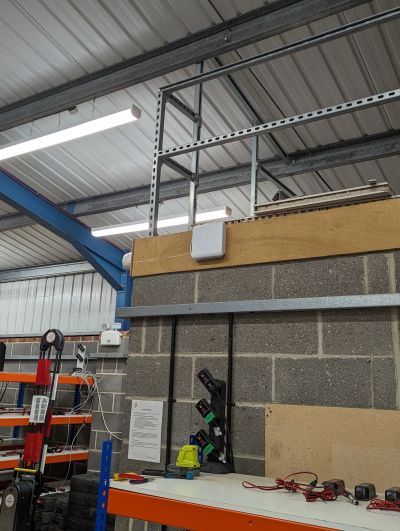
Industrial buildings can present installation challenges that do not exist in smaller commercial properties.
- Ceilings may be extremely high.
- Production machinery may restrict access.
- Areas may operate continuously.
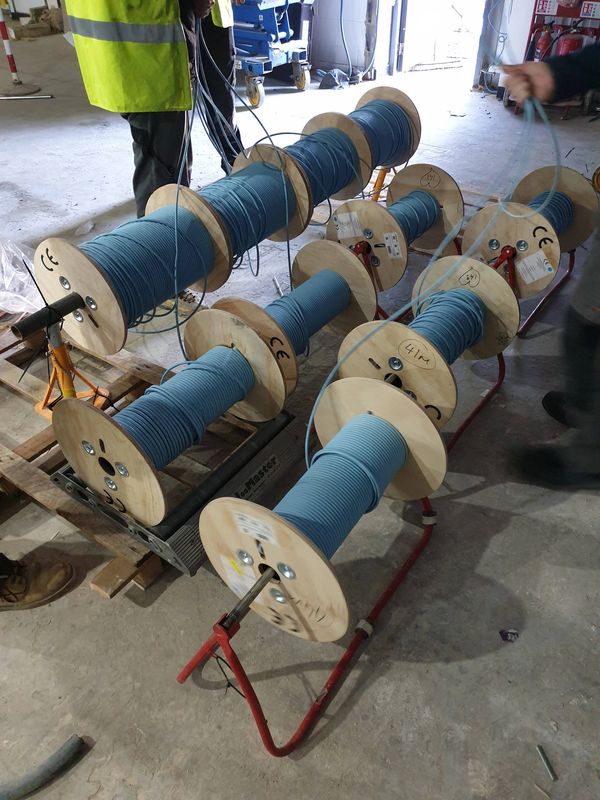
- Cable routes can extend over considerable distances and the installation may need to coordinate with electrical, data, mechanical and production infrastructure.
These things need to be considered before installation starts.
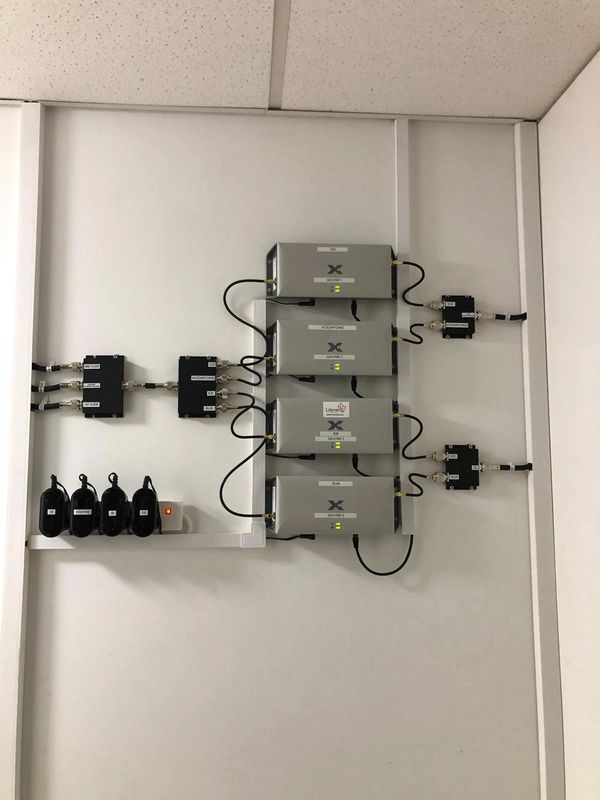
The positioning of donor antennas, internal coverage antennas, equipment and cabling all influence how well the finished mobile coverage system performs.
A professional design considers both RF performance and the practical realities of the factory.
New-Build Factories and Refurbishment Projects
Poor mobile coverage can sometimes become apparent only after a new factory has been completed.
The business may even have had good mobile coverage in an older building on the same site.
Modern construction can change that completely.
Highly insulated composite panels, metal building envelopes and energy-efficient glazing can significantly reduce the amount of mobile signal reaching the interior.
That is why mobile coverage is increasingly worth considering alongside the other communications infrastructure during the design of a new manufacturing facility.
It can also be considered during major refurbishment works.
Planning earlier can make donor antenna locations, internal antenna positions, cable routes and equipment locations much easier to incorporate cleanly into the building.
Installation Around Production
A factory cannot necessarily stop production while a mobile coverage system is being installed.
We plan the work around the practical operation of the site.
That may involve coordinating access with production or engineering teams, working around machinery, avoiding sensitive areas or scheduling parts of the installation outside normal production periods.
Where required, evening, weekend and other out-of-hours work can be considered.
Litenet can manage the whole process:
Survey. Design. Installation. Commissioning. Testing. Validation. Support.
That gives the customer one team responsible for understanding the original problem and delivering the finished system.
We Test the Finished Coverage
Installing and switching on the equipment is not where the project ends.
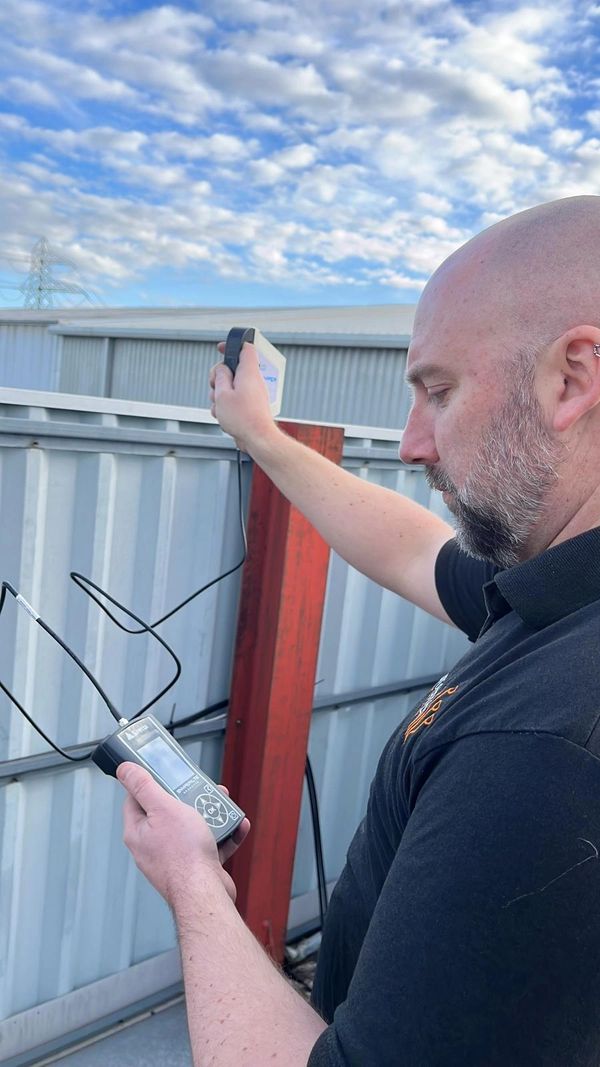
Once commissioned, the mobile environment can be tested again to confirm that the system is operating correctly and that coverage has improved in the areas it was designed to serve.
Where appropriate, those measurements can be compared with the original survey.
That gives the business evidence of what has actually changed rather than relying purely on the number of bars displayed on a phone.
For a site where cellular connectivity is supporting machinery or operational systems, that validation becomes particularly important.
The objective is useful, reliable connectivity — not simply a stronger-looking signal indicator.

Ofcom-Compliant Mobile Signal Boosting
Mobile signal repeaters used in the UK need to meet the relevant requirements for lawful operation.
Litenet designs commercial mobile coverage systems around equipment appropriate for legal use in the UK and suitable for the individual project.
Ofcom permits certain mobile signal repeaters to be used without a licence provided they meet the relevant technical requirements.
The objective is not simply to make the signal as powerful as possible.
It is to create a professionally designed in-building mobile coverage system that works with the mobile environment available at the site.